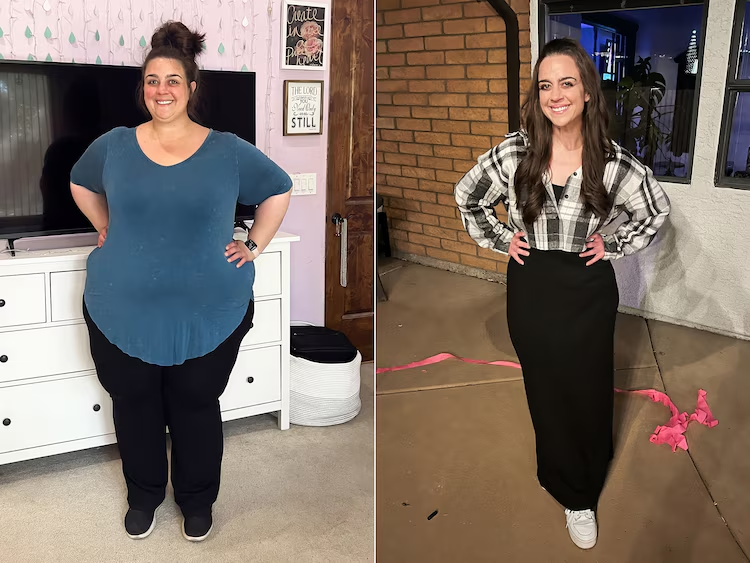
At 28 years old, Amy’s world had shrunk to the four walls of her home. At nearly 700 pounds, even the simplest daily tasks had become impossible. Walking across a room left her breathless. Showering without help wasn’t an option. Leaving the house was rare, not because she didn’t want to, but because the outside world had become both physically and emotionally unreachable.
The first thing she lost was school. Trying to keep up with classes while battling constant pain, discomfort, and limited mobility became unrealistic. Eventually, she dropped out. Friends drifted away—some quietly, others more directly—convinced that Amy’s life would never look “normal” again. To many of them, her future already seemed decided.
Her health confirmed their fears. Doctors warned her repeatedly that her condition was critical. The strain on her heart, joints, and organs was severe, and without change, her quality of life would continue to decline. These were not vague or distant warnings. They were urgent, direct, and terrifying.
Still, Amy wasn’t completely alone. She had a boyfriend who stayed by her side during her lowest moments. He helped her with daily needs, reassured her when shame and frustration overwhelmed her, and reminded her that he loved her as she was. For a long time, his support felt like the only stable part of her life. But it also shaped how she viewed herself—dependent, fragile, and unsure whether she could survive without someone else holding her up.
Her turning point didn’t come from a dramatic epiphany or sudden burst of motivation. It came from exhaustion. Amy was tired of existing instead of living. Tired of measuring her days by what she couldn’t do. Tired of doctors speaking about her body as if it were already beyond saving. When she was offered the opportunity to join a well-known weight loss program with medical supervision, therapy, and structure, she didn’t see it as a miracle. She saw it as her last real chance.
The process was brutal. Weight loss at that level isn’t glamorous, fast, or easy. It required strict dietary changes, painful physical therapy, and relentless discipline. Progress was slow. Setbacks were frequent. There were moments when her body resisted every effort, and frustration nearly pushed her to quit. But for the first time in years, every small improvement mattered—standing a little longer, walking a few more steps, doing something on her own that she couldn’t do the month before.
As the pounds dropped, something deeper changed as well. Amy’s sense of control began to return. She wasn’t simply reacting to life anymore—she was shaping it. She relearned patience, discipline, and trust in herself. Therapy helped her face the emotional patterns tied to her weight, including how much of her identity had become centered around being “the helpless one.”
With time, the numbers told an incredible story. Amy lost over 200 pounds. Her mobility improved dramatically. Her health stabilized. Tasks that once felt impossible became routine. She could move through the world with less fear and more confidence. But the most important transformation wasn’t physical—it was internal.
With her confidence growing, Amy chose to reclaim what she had lost. She returned to her studies and earned her degree. It wasn’t about proving anyone wrong. It was about finishing something she had been forced to abandon before she was ready. Education became another reminder that her life wasn’t over—it was still expanding.
Then came opportunities she never expected. As her transformation gained attention, Amy was approached for collaborations in fashion and body-positivity spaces. Her presence challenged traditional beauty standards while staying rooted in authenticity. She wasn’t trying to become someone else. She was showing what resilience, self-work, and real confidence could look like at any size. The same people who once overlooked her now saw her as powerful, inspiring, and influential.
Not everyone celebrated these changes.
As Amy grew stronger and more independent, the dynamic in her relationship shifted. Her boyfriend, who had once been her primary support, struggled to adjust. The role he had played for years was no longer necessary in the same way. Amy no longer depended on him for survival. She no longer needed saving.
Eventually, he ended the relationship. He admitted he felt lost, disappointed, and unsure of where he fit into her new life. It was a painful reality for Amy. The person who stayed when she was at her weakest couldn’t stay when she became stronger.
The breakup hurt, but it also revealed a hard truth: love built only on dependence is fragile. Growth exposes weaknesses that were always there. Amy allowed herself to grieve, but she refused to let the heartbreak undo the progress she had fought so hard to achieve.
Today, Amy’s story is often framed as a dramatic physical transformation, but that misses the real point. The true change wasn’t simply going from 700 pounds to 200. It was learning that her life didn’t have to be defined by limitation, pity, or fear. It was realizing that support matters—but self-agency matters more.
Her journey wasn’t neat or inspirational in a polished way. It was uncomfortable, messy, and demanding. It required facing painful truths about health, relationships, and self-worth. But it proved something simple and powerful: a clear goal, paired with consistent effort and the willingness to endure discomfort, can completely change the direction of a life.
Amy didn’t become extraordinary because she lost weight. She became extraordinary because she chose change when staying the same felt easier and safer. Her story isn’t about perfection or instant success. It’s about reclaiming ownership of your future—even when the odds are against you—and refusing to let anyone else decide how big or small your life is allowed to be.